


Walking Meditation
Lessons from the way of a Pilgrim.
“The Way of a Pilgrim,” translated by Nina A. Toumanova, provides an exceptional example of Russian spirituality with implications for a healthy way to generate calm – a state necessary for insight and understanding. The book opens with an anonymous pilgrim who attended church and heard many sermons, but none of them taught him how to pray incessantly, a goal he had. He sets out to seek a spiritual teacher to teach him how to pray ceaselessly. His new teacher gives him advice about (1) the meaning of incessant inner prayer – a continuous longing of the human spirit for God – and (2) that prayer itself will teach the pilgrim how to pray.
The pilgrim then leaves his spiritual guide and travels by foot until he meets another spiritual elder who better breaks down the mechanics of how to achieve constant prayer. The elder advises the pilgrim that calm, insight, and practice are necessary to learn how to pray ceaselessly, instructing him to practice incessant prayer for a week, then six thousand times per day while remaining calm, then twelve thousand prayers, eventually becoming an enjoyable habit. The pilgrim continues this inner prayer as he walks, matching the footstep cadence to his breath and words until he feels the prayer in his heart.
This beautiful account from the region of Kazan was first published in 1884. It highlights several aspects that may be applicable to cultivating calm for those who have experienced and continue to experience trauma within the Orthodox Church of today.
First, the pilgrim is engaged in walking meditation within natural environments throughout the book. Second, the pilgrim practices prayer, habituating himself in an intensive way at the beginning of his prayer recitation. Third, his prayer is combined with breathing and/or walking, which the pilgrim reports that he eventually feels in his heart. Finally, it is calm that enables the pilgrim to achieve the necessary insight which supports his spiritual practice.
Walking meditation. The word “meditation” simply means “to concentrate” on something specific, a theme throughout The Way of a Pilgrim. In the book, the pilgrim concentrates on the Jesus Prayer and gradually learns, through walking and breathing, to focus on three things at once: the words of the prayer, the presence of Christ, and the movement of the prayer into the heart. Walking meditation is not limited to this account of Russian spirituality as its beneficial effects have been studied academically[1], and walking meditation has been utilized in other faith-based traditions such as Buddhism.
Walking meditation, which involves consciously connecting the breath with the step cadence, provides an efficient and noninvasive means of enhancing vagal tone, a key regulator of heart rate variability (HRV). HRV is reduced, and thus, negatively affected in trauma patients. Because walking meditation involves controlled and concentrated breathing, this inevitably stimulates the vagus nerve. Vagal nerve stimulation therapy is effective in remediating stress and anxiety in trauma patients who are resistant to other interventions[2]. Since HRV is, in large measure, regulated by the vagus nerve, the possibility arises that, in addition to psychological trauma inducing deficits in HRV, perturbations in HRV may feed back to the brain and induce or exacerbate stress, perceived stress, or other emotional distress. One of the safest and most efficient ways to stimulate the vagus nerve is controlled, voluntary breathing that emphasizes longer exhales, especially during walking meditation, where steps and breath are consciously linked. This practice should not be forced. Instead, it involves calmly breathing in and out and dwelling in the natural environment while being present to its beauty.
Walking in natural environments provides more calm than walking in a busy and noisy city setting. The aspect of being “calm” is important because only under a calm state can insight be manifested. Insight, whereby a deep understanding of reality takes place, is critically important for healing from trauma. Without insight, therapeutic strategies aimed at lowering nervous system excitation are often insufficient for lasting healing. Walking meditation is also a safe and more tolerable alternative to seated quiet meditation, which I have observed some Orthodox parishes are currently practicing in the United States. Seated meditation has been associated with increased distress in trauma-exposed individuals, so careful assessment is necessary. The benefits of “walking meditation” are, therefore, well-known from different arenas.
At Prosopon Healing we continuously receive reports involving women – and some men – who have experienced sexual abuse or who are enduring harassment and rejection-induced emotional harm often by a member of the clergy within the Orthodox Church. This is not surprising given the fact that sexual violence is pervasive with over half of women and almost one in three men have experienced sexual violence involving physical contact during their lifetimes[3]. What is unfortunate, however, is that secular institutions often respond to victims of sexual violence in a more Christ-like manner than the Church. To date, leaders in the Orthodox Church, have remained silent about clergy-perpetrated sexual abuse taking place under their ranks. Practices such as walking meditation may offer an effective therapeutic strategy, helping survivors regain their calm bringing about insight in order to rebuild productive, meaningful lives.
In 2023, I presented a talk examining the negative impacts on the brain and behavior of adolescent girls and women when they are rejected from desired liturgical participation in the Orthodox Church[4]. At that time, I had only begun to scratch the surface of how certain church environments affect the health and well-being of girls and women. Of particular concern are parishes in which girls and women appear to be superficially included in the Sunday liturgical space, albeit with restrictions compared to their male peers, but harassed and rejected behind closed doors. After nearly three years of continued research, I can now say with confidence that these contexts can function as unsafe environments that sustain gender-based violence, with severe consequences on the behavioral health of both females and males. Parents should carefully evaluate whether these environments are safe and healthy places for their children, given the mounting evidence that exists between environmental context and long-term well-being.
In the behavioral neurosciences, it is well known that there are three main factors that impact mental health. They are, in order from those easiest to change to those most difficult: (1) environmental factors, (2) psychological factors dependent on the ability to achieve insight provided a calm state is cultivated, and (3) biological factors. Biological factors involving epigenetics, where genes are affected in the way they are expressed as a consequence of the noxious environment, are the hardest and take the longest to change or bring back to equilibrium.
Well-being must be taken seriously by Orthodox Christians. Simple practices from diverse Orthodox spiritual traditions that promote calm, insight and healing can be incorporated into daily practice. In this piece, I offer walking meditation as a practice. Some may wish to incorporate certain Orthodox prayers, though those who have been harmed by clergy who incorporated prayer into their abusive behavior should choose other creative means.
Walking meditation involves taking three or four steps while breathing in, then four or five or six steps to breathe out being fully aware of the present not the past trauma or future threat. The exhalation is usually longer than the inhale, so more steps are typically needed for the exhale. The number of steps adjust to your breath. You can be creative with this practice and enjoy the beauty of nature. If you practice walking meditation often, it will bring you much benefit. For those who are wheelchair bound, an option may be to coordinate the arms lifting above the head while breathing in and arms slowly being brought back down while breathing out.
The pilgrim in The Way of a Pilgrim was said to have practiced his ceaseless prayer thousands of times per day, especially as he was walking. This is just an example of how habituation, or repetitive practice, is necessary to obtain benefit – in the case of the pilgrim, his goal was to achieve ceaseless prayer, and he did.
Check out our website to learn more about Prosopon Healing. Some tabs may only be visible on a computer: https://www.prosoponhealing.com/clergy-abuse
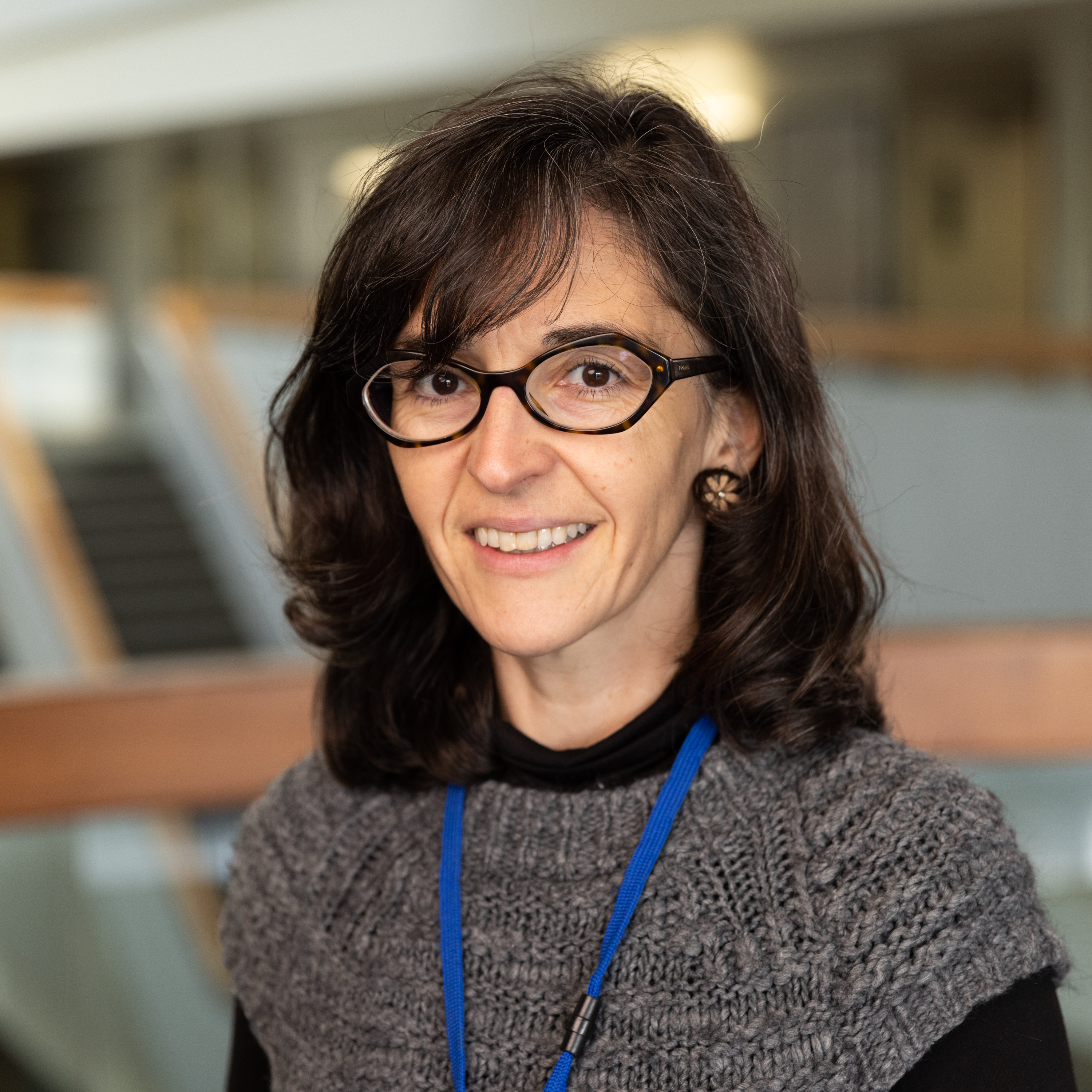
Dr. Hermina Nedelescu is a Romanian-born neuroscientist and theologian with the Center for Theology and Natural Sciences (CTNS) at the Graduate Theological Union in Berkley, California.
Her scientific work is concerned with the neurobiological control of abnormal behavior and brain functions relevant to human psychopathology. The majority of this work is directed to understanding drug and sexual abuse with emphasis on trauma-induced maladaptive behaviors. As a theologian she works to bridge the gap between science and theology with a focus on developing a theological anthropology rooted in the Orthodox tradition and connecting this to modern neuroscience.
[1]. Teut M, Roesner EJ, Ortiz M, Reese F, Binting S, Roll S, Fischer HF, Michalsen A, Willich SN, Brinkhaus B. Mindful walking in psychologically distressed individuals: a randomized controlled trial. Evid Based Complement Alternat Med. 2013;2013:489856. doi: 10.1155/2013/489856. Epub 2013 Jul 31. PMID: 23983786; PMCID: PMC3747483.
[2]. Powers MB, Hays SA, Rosenfield D, Porter AL, Gallaway H, Chauvette G, Smits JAJ, Warren AM, Douglas M, Naftalis R, Wigginton JG, Foreman M, Kilgard MP, Rennaker RL. Vagus nerve stimulation therapy for treatment-resistant PTSD. Brain Stimul. 2025 May-Jun;18(3):665-675. doi: 10.1016/j.brs.2025.03.007. Epub 2025 Mar 15. PMID: 40097094.
[3]. U.S. Centers for Disease Control and Prevention. About Sexual Violence. Dec 17 2025.
[4]. Liturgical Service by Girls and Women. St. Phoebe Center for the Deaconess. Nedelescu, Hermina, “Liturgical Participation and Why it Matters”, from 1 hour and 7 minutes into the recording. https://youtu.be/14wuOj6Vij4?si=zaN_r3kuqS2lxZ4G
Comments